
Introduction
Artificial intelligence has transformed the way people interact with technology, and one of its most powerful branches is Deep Learning. From voice assistants and facial recognition to self-driving cars and medical diagnosis, Deep Learning has become the driving force behind many intelligent systems used today. Businesses, researchers, and developers rely on this technology to solve complex problems that traditional computer programs struggle to handle.
Deep Learning enables computers to recognize patterns, analyze massive amounts of data, and make predictions with remarkable accuracy. Unlike traditional programming, where every rule must be manually defined, deep learning models learn automatically from examples. This ability allows machines to improve their performance over time as they process more information.
The rapid growth of computing power, cloud technology, and big data has accelerated the adoption of Deep Learning across nearly every industry. Companies use it to automate operations, improve customer experiences, detect fraud, optimize manufacturing, and create smarter digital products. As organizations continue investing in artificial intelligence, understanding Deep Learning has become increasingly valuable for students, professionals, and business leaders alike.
This guide explains what Deep Learning is, how it works, where it is used, its advantages, challenges, career opportunities, and practical tips for getting started.
What is Deep Learning?
Deep Learning is a specialized branch of machine learning that uses artificial neural networks with multiple layers to process data and learn complex patterns. These neural networks are inspired by the structure of the human brain, allowing computers to analyze information in a way that resembles human learning.
Unlike traditional machine learning algorithms that require manual feature selection, Deep Learning automatically identifies important features from raw data. This makes it highly effective for solving complicated problems involving images, videos, speech, and natural language.
Deep Learning models improve continuously as they are trained with larger datasets. The more quality data available, the better the model usually performs.
How Deep Learning Works
Deep Learning relies on artificial neural networks composed of multiple interconnected layers.
The basic process includes:
- Collecting large amounts of training data.
- Feeding data into the neural network.
- Processing information through hidden layers.
- Learning patterns by adjusting internal weights.
- Generating predictions or classifications.
- Improving accuracy through repeated training.
Each layer extracts more advanced information from the previous one. For example, when recognizing images, early layers detect edges while deeper layers identify complete objects such as faces, vehicles, or animals.
Core Components of Deep Learning
Artificial Neural Networks
Neural networks are the foundation of Deep Learning. They consist of input layers, hidden layers, and output layers that work together to process information.
Training Data
Large, high-quality datasets are essential because Deep Learning models learn directly from examples rather than manually written rules.
Activation Functions
Activation functions determine how information flows through neural networks, helping models capture complex relationships within data.
Loss Function
The loss function measures prediction errors, allowing the model to improve during training.
Optimization Algorithms
Optimization techniques such as gradient descent help adjust model parameters for better performance.
Popular Types of Deep Learning Models
Several neural network architectures are designed for different tasks.
Convolutional Neural Networks (CNNs)
These networks specialize in image recognition, object detection, medical imaging, and facial recognition.
Recurrent Neural Networks (RNNs)
RNNs process sequential information such as speech recognition, language translation, and time-series forecasting.
Long Short-Term Memory Networks (LSTMs)
LSTMs improve traditional RNNs by remembering long-term patterns in sequential data.
Transformers
Transformer models have revolutionized natural language processing by handling text more efficiently than earlier neural networks.
Autoencoders
Autoencoders compress information and are commonly used for anomaly detection, image reconstruction, and feature extraction.
Applications of Deep Learning
Deep Learning powers countless technologies used every day.
Healthcare
Doctors use Deep Learning to detect diseases, analyze medical images, predict patient outcomes, and assist in treatment planning.
Finance
Banks use intelligent systems for fraud detection, risk assessment, algorithmic trading, and customer behavior analysis.
Transportation
Autonomous vehicles rely on Deep Learning for lane detection, traffic recognition, obstacle avoidance, and navigation.
Manufacturing
Factories improve quality control, predictive maintenance, and production efficiency using Deep Learning solutions.
Retail
Retail businesses personalize recommendations, forecast demand, optimize inventory, and improve customer service.
Cybersecurity
Security systems identify unusual behavior, detect cyber threats, and prevent attacks using intelligent pattern recognition.
Education
Educational platforms personalize learning experiences and provide adaptive content based on student performance.
Benefits of Deep Learning
- Learns automatically from data.
- Delivers highly accurate predictions.
- Handles massive datasets efficiently.
- Improves over time with additional training.
- Supports automation across industries.
- Recognizes complex visual patterns.
- Enables advanced speech recognition.
- Improves natural language understanding.
- Reduces manual feature engineering.
- Powers intelligent decision-making.
- Enhances customer experiences.
- Supports innovation in healthcare and science.
Challenges of Deep Learning
Despite its impressive capabilities, Deep Learning also presents several challenges.
- Requires large datasets.
- High computational costs.
- Long training times.
- Significant hardware requirements.
- Difficult model interpretation.
- Risk of overfitting.
- Data quality greatly affects performance.
- Expensive implementation for small organizations.
Proper planning and high-quality datasets help minimize these limitations.
Career Opportunities
As artificial intelligence continues expanding, professionals with Deep Learning expertise are in high demand.
Popular career paths include:
- AI Engineer
- Machine Learning Engineer
- Data Scientist
- Computer Vision Engineer
- NLP Engineer
- Robotics Engineer
- Research Scientist
- AI Consultant
- Software Engineer
- Business Intelligence Specialist
These careers often offer competitive salaries and opportunities across healthcare, finance, manufacturing, education, and technology companies.
Skills Needed to Learn Deep Learning
Beginners should focus on developing these skills:
- Python programming
- Mathematics
- Statistics
- Linear algebra
- Calculus
- Machine learning fundamentals
- Data visualization
- Data preprocessing
- Neural network concepts
- Model evaluation
Building projects is one of the fastest ways to gain practical experience.
Common Mistakes to Avoid
Many beginners make similar mistakes while learning Deep Learning.
Avoid these common errors:
- Ignoring data quality.
- Using insufficient training data.
- Skipping data preprocessing.
- Choosing overly complex models.
- Ignoring model evaluation.
- Not validating results properly.
- Failing to tune hyperparameters.
- Expecting immediate perfect accuracy.
Learning from experimentation is an important part of becoming proficient.
Future of Deep Learning
The future of Deep Learning looks extremely promising. Researchers continue developing more efficient neural networks capable of solving increasingly complex problems with less computational power.
Emerging trends include:
- Generative AI
- Edge AI
- Explainable AI
- Autonomous robotics
- Personalized healthcare
- Smart manufacturing
- Advanced language models
- Real-time computer vision
- AI-powered scientific research
- Sustainable AI computing
These innovations are expected to reshape industries and create entirely new business opportunities over the coming years.
Frequently Asked Questions
What is Deep Learning?
Deep Learning is a branch of artificial intelligence that uses multi-layer neural networks to learn patterns from large datasets automatically.
Is Deep Learning different from machine learning?
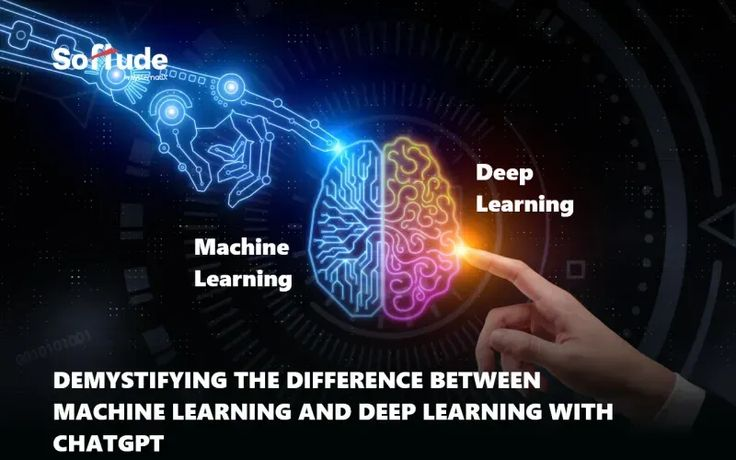
Yes. Machine learning includes many algorithms, while Deep Learning specifically uses deep neural networks capable of handling highly complex data.
Do I need programming skills?
Yes. Python is the most popular programming language for Deep Learning development.
Is Deep Learning difficult to learn?
It requires dedication and consistent practice, but beginners can learn gradually by understanding programming, mathematics, and machine learning fundamentals.
Which industries use Deep Learning?
Healthcare, finance, education, manufacturing, transportation, cybersecurity, retail, agriculture, and entertainment all benefit from Deep Learning technologies.
Does Deep Learning require powerful computers?
Large models often require GPUs or cloud computing resources, although beginners can start learning using standard computers and smaller datasets.
Expert Tips
- Master Python before learning advanced neural networks.
- Focus on understanding concepts instead of memorizing code.
- Practice with real-world datasets.
- Build multiple portfolio projects.
- Learn data preprocessing thoroughly.
- Keep up with research papers and industry developments.
- Experiment with different neural network architectures.
- Optimize models carefully instead of simply increasing their size.
- Participate in AI communities and competitions.
- Continue learning because Deep Learning evolves rapidly.
Conclusion
Deep Learning has become one of the most influential technologies of the modern digital era. Its ability to analyze enormous datasets, recognize complex patterns, and continuously improve through learning makes it a cornerstone of artificial intelligence. From healthcare and finance to transportation, manufacturing, and education, Deep Learning is transforming how organizations solve problems and deliver innovative services. As computing power increases and more data becomes available, its capabilities will continue expanding across countless industries.
For students, developers, entrepreneurs, and business leaders, understanding Deep Learning is no longer optional but an increasingly valuable skill. While learning this technology requires patience, mathematical understanding, and practical experience, the long-term rewards are significant. By building strong programming skills, working on real-world projects, and staying updated with emerging trends, anyone can begin a successful journey into the exciting world of Deep Learning and contribute to the next generation of intelligent technologies.
